Table of Contents
ToggleIndoor air quality isn’t something most homeowners think about until allergy season hits or a dusty renovation project fills the house with particles. Air purifiers tackle that problem, but the ongoing cost of replacement filters can add up fast, sometimes $50 to $150 per year depending on the model. Enter the air purifier with washable filter: a practical alternative that cuts recurring expenses while still capturing dust, pollen, pet dander, and other airborne contaminants. These units use permanent or semi-permanent filters that can be cleaned and reused for years, making them a solid choice for budget-conscious DIYers and anyone looking to reduce waste without sacrificing air quality.
Key Takeaways
- An air purifier with washable filter eliminates recurring replacement costs of $50–$150 annually, paying for itself within 1–2 years despite a slightly higher upfront investment.
- Washable filters are semi-permanent HEPA-type systems that capture dust, pollen, and pet dander without the environmental waste of disposable cartridges, reducing annual landfill contributions from 4–6 filters per household.
- Proper maintenance requires cleaning every 2–4 weeks by vacuuming, washing with mild soap, and air-drying completely for 24 hours to prevent mold and maintain filtration performance.
- Choose an air purifier with washable filter rated for your room size with a CADR of 200+ for bedrooms and 300+ for larger spaces, with front-panel filter access for convenient regular cleaning.
- Washable filter models work best for bedrooms, living rooms, workshops, and pet areas, but aren’t suitable for medical-grade applications requiring certified HEPA filtration or severe respiratory conditions.
What Is an Air Purifier with a Washable Filter?
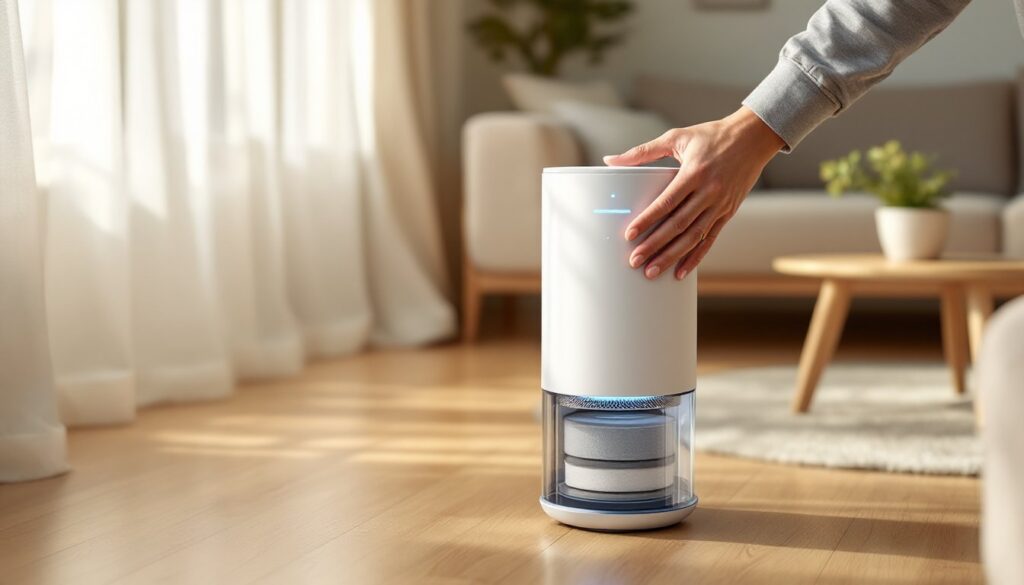
A washable filter air purifier uses a reusable filtration system instead of disposable cartridges. Most commonly, these units feature washable pre-filters made from foam, mesh, or fabric that trap larger particles like dust, hair, and lint. Some models, particularly marketed as an air purifier with washable HEPA filter, use permanent electrostatic or foam filters designed to mimic HEPA performance (capturing particles down to 0.3 microns) without the need for replacements.
It’s important to clarify terminology here. True HEPA filters (High-Efficiency Particulate Air) are typically disposable paper-based media that meet strict standards for particle capture. A washable version is usually a HEPA-type or permanent HEPA-style filter, it won’t be certified to the same standard but comes close enough for most residential applications. Some higher-end units combine a washable pre-filter with a traditional HEPA cartridge, giving you the option to wash one layer and replace the other less frequently.
These purifiers work best in spaces where moderate filtration is sufficient: bedrooms, living rooms, workshops, or garages. They’re not a substitute for medical-grade HEPA in environments requiring sterile air, but for everyday dust and allergen control, they’re more than adequate.
Why Choose a Washable Filter Over Disposable Filters?
Switching to a washable filter model isn’t just about convenience, it’s a decision that affects your wallet, your maintenance routine, and the environment.
Long-Term Cost Savings
Disposable HEPA filters typically need replacement every 6 to 12 months, costing anywhere from $20 to $80 per filter depending on the brand and size. For a household running two or three purifiers, that’s $100 to $300 annually. A washable filter eliminates that recurring expense. While the upfront cost of a best air purifier with washable filter might be slightly higher, the unit pays for itself within the first year or two.
Consider a large room air purifier with washable filter rated for spaces up to 500 square feet. Models in this category range from $100 to $250, and the filter can last 3 to 5 years with regular cleaning. Compare that to a disposable-filter unit at $120 plus $60 per year in replacements, after three years, you’ve spent $300 versus the flat $150 for the washable model.
One caveat: some washable filters do degrade over time. Foam and mesh materials can lose structural integrity after repeated washing, and electrostatic coatings can wear off. Budget for a replacement every 3 to 5 years, but that’s still a fraction of the cost of annual disposables.
Environmental Benefits
Disposable filters end up in landfills. A typical household might toss 4 to 6 filters per year across multiple units, that’s fiberglass, plastic frames, and sometimes activated carbon, none of which breaks down quickly. Washable filters reduce that waste stream to near zero. For DIYers and homeowners who prioritize sustainability, whether composting kitchen scraps or reusing lumber from demo projects, a washable system fits that ethos.
Washing a filter uses water and a small amount of detergent, but the environmental footprint is negligible compared to manufacturing and shipping replacement cartridges. If you’re already conscious about material waste during renovations (saving off-cuts, recycling drywall, donating usable fixtures), a washable air purifier is a logical extension of that mindset.
How to Clean and Maintain Your Washable Filter
A washable filter only stays effective if you actually clean it, and clean it correctly. Skipping maintenance is like ignoring clogged gutters: the system still runs, but performance drops fast.
Frequency: Most manufacturers recommend cleaning every 2 to 4 weeks, depending on usage and air quality. If you’re running the purifier in a dusty workshop or during a drywall sanding project, check it weekly. A clogged filter reduces airflow, forcing the motor to work harder and shortening the unit’s lifespan.
Step-by-step cleaning process:
- Power off and unplug the unit. This isn’t optional, motors and electronics don’t mix well with water.
- Remove the filter. Most washable filters slide out from a front or side panel. Check your manual for the exact release mechanism.
- Vacuum first. Use a brush attachment to remove loose dust and debris. This step prevents clogging your sink or tub with a layer of sludge.
- Wash with mild detergent. Use lukewarm water and a few drops of dish soap or a gentle laundry detergent. Avoid bleach, fabric softener, or harsh chemicals, they can degrade foam or mesh and leave residues that degrade air quality.
- Rinse thoroughly. Make sure all soap is gone. Residue can attract dust or emit odors when the unit runs.
- Air dry completely. This is critical. A damp filter promotes mold and mildew growth. Set it on a drying rack or towel in a well-ventilated area for at least 24 hours. Don’t reinstall until it’s bone dry.
- Inspect for damage. Check for tears, thinning foam, or loose mesh. If the filter is falling apart, it’s time for a replacement.
Pro tip: Keep a second filter on hand if the manufacturer sells spares. Swap them out during cleaning cycles so the purifier doesn’t sit idle for a day.
Safety note: Wear gloves if you’re sensitive to dust or have allergies. The filter will be coated with whatever particles it’s been capturing, pollen, pet dander, mold spores, and fine dust from sanding or cutting lumber.
Top Features to Look for When Buying
Not all air purifier washable filter models are created equal. Here’s what separates a solid unit from a underperformer.
Room size coverage: Match the purifier’s rated square footage to your space. A unit rated for 300 square feet won’t keep up in a 600-square-foot open-concept living area. For large spaces, look for a large room air purifier with washable filter rated for 400 to 600 square feet or more. Independent testing labs like CNET’s air purifier reviews often verify manufacturer claims, so cross-reference specs before buying.
CADR rating (Clean Air Delivery Rate): This measures how quickly the unit filters air, reported in cubic feet per minute (CFM) for dust, pollen, and smoke. Higher is better. A CADR of 200+ is solid for a bedroom: 300+ suits a larger living room or workshop.
Filter type and layers: Some models use a single washable pre-filter paired with a replaceable HEPA or carbon layer. Others go all-in on permanent filters. If odor control matters (cooking smells, workshop fumes, pet odors), look for activated carbon, though carbon filters are rarely washable and will need periodic replacement.
Ease of filter access: If you have to disassemble half the unit to reach the filter, you’re less likely to clean it regularly. Front-panel access is ideal. Some units have a filter-change indicator light, which is handy but not essential if you keep a cleaning schedule.
Fan speed and noise: Multiple fan speeds let you balance filtration and noise. A low setting is quiet enough for a bedroom: high speed ramps up for cooking smoke or post-sanding cleanup. Check decibel ratings if noise matters. Models in the Good Housekeeping air purifier roundup are tested for noise alongside filtration performance.
Portability and footprint: If you plan to move the unit between rooms, weight and handle design matter. A 15-pound purifier with a carry handle beats a 25-pound tower you have to wrestle off a shelf.
Energy consumption: Air purifiers run for hours at a time. Look for an Energy Star rating or check the wattage. A unit pulling 50 watts on high speed costs roughly $5 to $10 per year to run continuously, depending on local electricity rates.
Best Rooms and Uses for Washable Filter Air Purifiers
Washable filter units shine in environments where moderate filtration is sufficient and where frequent filter changes would be a hassle.
Bedrooms: Dust, pollen, and pet dander settle overnight. A mid-sized unit (200 to 400 square feet) on low speed provides steady filtration without the cost of replacing cartridges every season. If allergies are a concern, pair a washable pre-filter model with a supplemental HEPA stage.
Living rooms and open-concept areas: Larger spaces benefit from a large room air purifier with washable filter rated for 500+ square feet. These units handle everyday dust and improve air circulation without the recurring expense of oversized replacement filters. Models highlighted in guides like Digital Trends’ best air purifiers often feature washable components for easier upkeep.
Home workshops and garages: Sawdust, drywall dust, and fumes from stains or finishes are part of the DIY life. A washable filter is ideal here, it’ll clog faster than in a bedroom, but you can rinse it weekly without burning through disposable cartridges. Pair it with proper ventilation and PPE (respirator, safety glasses, hearing protection). An air purifier supplements ventilation: it doesn’t replace it.
Basements and utility rooms: These spaces tend to be dusty and humid. A washable filter handles the particulate load, but check for mold or moisture issues first. No air purifier fixes a damp basement, address the source (sump pump, dehumidifier, sealed foundation cracks) before relying on filtration.
Pet owners: Washable filters capture pet hair and dander, though they won’t eliminate odors without an activated carbon layer. Clean the filter more frequently if you have multiple pets or a heavy-shedding breed.
Not recommended for: If someone in the household has severe asthma, COPD, or immune compromise, consult a healthcare provider before relying solely on a washable system. True medical-grade HEPA is the safer bet in those cases, even if it costs more to maintain.