Table of Contents
ToggleBuilt-in refrigerators transform kitchens from basic appliance setups into streamlined, high-end spaces. Unlike the standard fridge that sticks out like a sore thumb, a built-in unit sits flush with cabinetry, creating the kind of seamless look typically found in luxury homes. But these appliances aren’t just about aesthetics, they involve specific installation requirements, cabinet modifications, and a significantly different price point than freestanding models. For homeowners planning a kitchen remodel or considering an appliance upgrade, understanding what a built-in refrigerator actually entails, from the physical differences to the installation complexities, helps make a smarter decision. This guide breaks down the practicalities, costs, and considerations that matter most.
Key Takeaways
- A built-in refrigerator mounts flush with cabinetry at a standard 24-inch depth, creating a seamless, luxury appearance unlike freestanding models that protrude 30-36 inches into the kitchen.
- Built-in refrigerator costs range from $5,000 for entry-level units to $15,000+ for premium models, with total project costs (including installation and cabinet work) typically reaching $7,000-$18,000.
- Despite higher upfront costs, built-in refrigerators offer superior durability lasting 20+ years with commercial-grade components and better resale value compared to standard freestanding appliances.
- Installation of a built-in requires professional contractors for cabinet modifications, electrical work, and precise measurements, with ventilation through the toe kick or top being non-negotiable to prevent compressor failure.
- Prioritize dual compressors, panel-ready designs, humidity-controlled crispers, and 5-10 year sealed system warranties when selecting a built-in refrigerator to maximize freshness, longevity, and kitchen aesthetics.
What Is a Built-In Refrigerator and How Does It Differ from Freestanding Models?
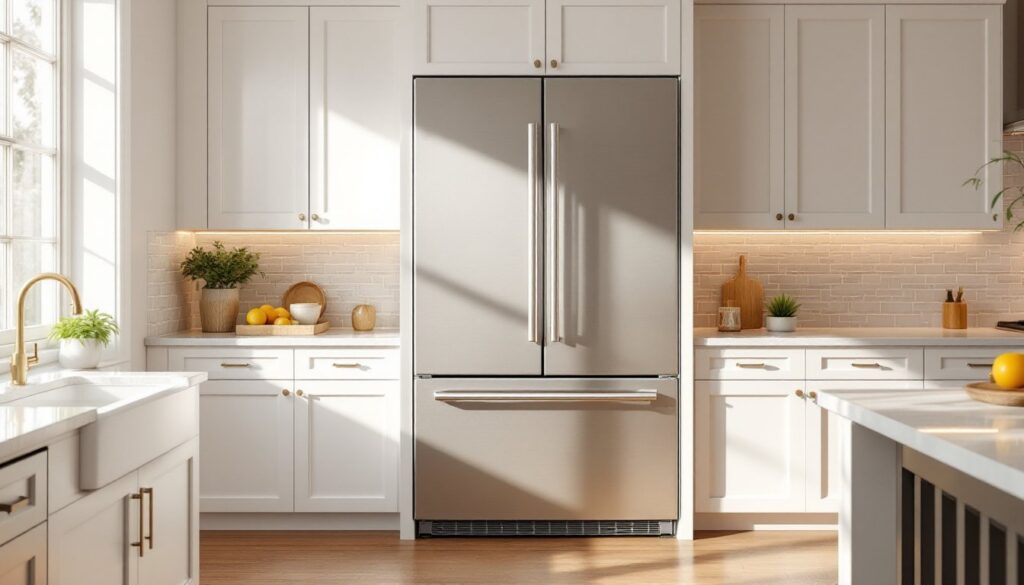
A built-in refrigerator mounts flush with surrounding cabinetry, typically at a standard 24-inch depth that matches most kitchen cabinets. The unit itself is designed to fit within a cabinet opening, with only the door and handle extending beyond the frame. This design creates a clean, integrated appearance where the fridge doesn’t protrude several inches into the kitchen.
Freestanding refrigerators, by comparison, measure 30-36 inches deep and stand independently wherever there’s adequate clearance. They rely on exposed sides and backs for heat dissipation, which is why they need several inches of breathing room on all sides. Built-ins use venting systems along the toe kick or top of the unit to expel heat, allowing them to fit snugly into cabinetry without overheating.
The dimensional difference matters beyond aesthetics. A built-in’s shallower depth sacrifices some interior capacity, typically offering 18-22 cubic feet compared to a freestanding model’s 20-30 cubic feet in the same width. But, built-ins are often wider (42-48 inches versus the standard 36 inches) to compensate for lost depth.
Another key distinction: built-in refrigerators require proper framing and cabinet modifications. The opening must accommodate not just the unit’s width and height, but also allow for ventilation clearances specified by the manufacturer (typically 1-2 inches at the top and sides). Freestanding models just need a floor space and an outlet.
Key Benefits of Installing a Built-In Refrigerator
The primary advantage is the seamless, custom look that immediately elevates a kitchen’s design. When cabinets run flush from floor to ceiling without a bulky appliance breaking the line, the space feels larger and more cohesive. Many homeowners planning kitchen design ideas specifically around built-in appliances see a notable increase in perceived square footage, especially in smaller kitchens.
Built-ins also allow for custom panel options. Most models accept cabinet-matching door panels, letting the refrigerator virtually disappear into the cabinetry. This feature is especially valuable in open-concept layouts where the kitchen is visible from living areas, the appliance doesn’t become a visual focal point.
Durability and longevity are another selling point. Built-in refrigerators are typically constructed with commercial-grade components and designed for decades of use. While freestanding models often last 10-15 years, quality built-ins can run 20+ years with proper maintenance. The compressors, hinges, and seals are built to heavier-duty standards.
Counter depth also improves kitchen workflow. With the fridge no longer jutting into the room, there’s better traffic flow and more usable aisle space. In galley kitchens or narrow layouts, this difference can be the margin between a cramped workspace and a functional one.
Finally, built-in units hold resale value better than standard appliances. High-end buyers specifically look for integrated appliances as a marker of quality renovation work. That premium doesn’t always recoup the full upfront cost, but it narrows the gap significantly compared to freestanding models.
Drawbacks and Considerations Before You Buy
The biggest hurdle is cost. Built-in refrigerators start around $5,000 and easily reach $10,000-$15,000 for premium brands with full features. That’s 3-5 times the price of a comparable freestanding model. If budget is tight, that money might deliver more value spread across multiple kitchen upgrades rather than a single appliance.
Reduced capacity is another trade-off. Even with a wider footprint, the shallower depth means less total storage. Families who stock up on groceries or entertain frequently may find the space constraints frustrating. There’s no getting around physics, less depth equals fewer shelves and less bulk storage.
Installation isn’t a DIY project for most homeowners. A built-in requires cabinet modifications, precise measurements, and often electrical or plumbing work if adding an ice maker or water line. You’ll need a carpenter or skilled contractor to build or modify the cabinet surround. Factor in $500-$1,500 for professional installation on top of the appliance cost.
Maintenance and repairs also cost more. Replacement parts for built-in refrigerators are pricier, and not all appliance repair techs are familiar with the specific mechanisms. Service calls can run $200-$400 before parts, compared to $100-$200 for standard models.
Depth compatibility can trip up renovations. If existing cabinets are standard 24-inch depth, you’re set. But older homes with shallower cabinets (21-22 inches) may require rebuilding the entire cabinet run to accommodate the unit and its ventilation needs. That cascades into additional cabinetry costs that can double the project budget.
Finally, built-in refrigerators aren’t portable. They’re semi-permanently installed, so if you move, the unit typically stays. That $12,000 appliance becomes a selling feature rather than something you take with you.
Cost Breakdown: What to Expect When Budgeting for a Built-In
Entry-level built-in refrigerators from reputable manufacturers start at $5,000-$7,000. These typically offer basic stainless interiors, standard cooling systems, and straightforward controls. They’ll be 36-42 inches wide with around 20 cubic feet of capacity.
Mid-range models ($7,000-$10,000) add features like dual compressors for separate fridge and freezer cooling, better humidity controls, LED lighting, and Wi-Fi connectivity. Width options expand to 48 inches, and you’ll see higher-end finishes and quieter operation.
Premium units ($10,000-$15,000+) include advanced climate zones, air purification systems, custom panel-ready designs, and commercial-grade construction. Brands at this tier often offer 5-10 year warranties on sealed systems versus the standard 1-2 years.
Installation costs break down as follows:
- Cabinet modification or construction: $800-$2,500 depending on whether you’re retrofitting or building new
- Electrical work (dedicated circuit if needed): $150-$400
- Plumbing for water line: $100-$300
- Labor for appliance install and leveling: $200-$500
Custom cabinet panels add another $500-$2,000 depending on your cabinet maker and finish. If matching existing cabinetry, expect to pay for custom millwork.
Total project cost for a built-in refrigerator typically lands between $7,000-$18,000 when accounting for the appliance, installation, cabinet work, and panels. That’s a significant chunk of a kitchen remodel budget, which is why many homeowners prioritize this upgrade only when doing a full renovation rather than as a standalone appliance replacement.
Installation Requirements and Planning Tips
Start with accurate measurements. Built-in refrigerators require a cabinet opening sized to manufacturer specs, typically the unit width plus 1-2 inches, and height with 1 inch clearance at the top for ventilation. The depth must accommodate the unit body (usually 24 inches) plus any rear wall clearance for plumbing connections.
Check your electrical setup early. Most built-ins require a dedicated 115V or 120V circuit with a GFCI outlet. If your current fridge shares a circuit with other appliances, you’ll need an electrician to run a new line. This work requires pulling permits in most jurisdictions, so factor in inspection time.
Ventilation is non-negotiable. Review the integrated refrigerators guide to see how different models handle heat dissipation. Some vent through the toe kick, others through the top. The cabinet surround must allow this airflow, blocking vents leads to compressor failure and voided warranties.
Flooring matters more than you’d think. Built-ins are heavy (300-500 pounds empty) and distribute weight across a relatively small footprint. Subfloors should be solid: if installing over vinyl or laminate, make sure the underlying structure can handle the load without flexing. Unlevel floors require shimming and precise adjustment to prevent door alignment issues.
If adding a water line for the ice maker, route it before final cabinet installation. A quarter-inch copper or braided stainless line runs from the nearest cold water supply with a shutoff valve. This is easier to snake through framing before cabinets are secured.
Door swing clearance deserves attention. Built-in doors often swing wider than freestanding models due to their depth. Measure the arc to ensure doors won’t hit adjacent cabinets, islands, or walls when fully open. Some models offer reversible hinges, decide on swing direction before installation.
Wait 24 hours after installation before plugging in the unit. This allows refrigerant oils to settle after transport. Once powered on, it takes 4-6 hours to reach proper cooling temperature. Don’t load food until temps stabilize at 35-38°F for the fridge and 0-5°F for the freezer.
Top Features to Look for in a Built-In Refrigerator
Dual compressors (or dual evaporators) rank as one of the most valuable upgrades. This system allows independent temperature and humidity control for the fridge and freezer compartments. The result: fresher produce that lasts longer and frozen goods that don’t suffer freezer burn from dry air. Single-compressor systems share cooling, which creates compromises in both zones.
Panel-ready designs offer maximum flexibility. These models come with a stainless or plain door designed to accept custom cabinet panels. Your cabinet maker cuts panels to match existing cabinetry, creating a truly seamless look. Some units include trim kits that frame the panel for a finished appearance.
Adjustable shelving seems basic but varies widely in quality. Look for spill-proof glass shelves that contain leaks and can be repositioned without tools. Wire shelves are cheaper but harder to clean and less stable for heavier items.
Humidity-controlled crisper drawers extend produce life significantly. Dedicated settings for high humidity (leafy greens) versus low humidity (fruits) prevent premature wilting or ripening. Better models include separate controls for multiple drawers.
Integrated ice makers and water dispensers add convenience but require that water line hookup. Through-the-door dispensers break the clean panel look, so many built-in buyers opt for internal ice makers only. Consider your family’s usage, internal-only ice can be inconvenient if you fill water bottles frequently.
LED lighting throughout the interior (not just the top) makes finding items easier and runs cooler than incandescent bulbs. Look for lights that illuminate corners and crisper drawers, not just main shelves.
Wi-Fi connectivity and smart features let you monitor temps, get filter change alerts, and sometimes control settings remotely. According to comprehensive refrigerator buying guides, smart features remain a nice-to-have rather than essential, but they can alert you to door-left-open situations or power outages when you’re away.
Quiet operation matters in open-concept homes. Built-in refrigerators should run at 38-42 decibels max, roughly the sound level of a library. Cheaper models or those with older compressor tech can hum noticeably, which becomes annoying when the kitchen opens to living spaces.
Warranty coverage varies dramatically. Standard warranties cover 1 year parts and labor, but sealed system (compressor, evaporator, condenser) coverage extends 5-10 years on better models. This matters given repair costs, read the fine print before buying.
Conclusion
Built-in refrigerators deliver a premium, integrated look that elevates any kitchen, but they require careful planning and a substantial budget. The seamless design, custom panel options, and long-term durability justify the investment for homeowners doing complete kitchen renovations or building custom homes. But, the reduced capacity, higher costs, and installation complexity make them a poor fit for quick appliance swaps or tight budgets. If you’re committed to the built-in route, prioritize models with dual compressors, solid warranties, and features that match your cooking and storage habits, not just the aesthetics.