Table of Contents
ToggleThe Frigidaire Gallery dishwasher line has carved out a solid reputation for balancing performance with affordability, a sweet spot for homeowners tackling kitchen upgrades without very costly. Whether you’re replacing an aging unit that sounds like a gravel truck or outfitting a new kitchen, understanding what these mid-range models actually deliver is crucial. This guide breaks down the features, compares top models, and walks through the installation and maintenance steps DIYers need to know before committing to a purchase.
Key Takeaways
- The Frigidaire Gallery dishwasher offers mid-range value with a stainless steel tub, 47–52 decibel noise levels, and OrbitClean spray arm technology that reduces the need for pre-rinsing.
- Gallery models deliver Energy Star efficiency at 3.5–4.5 gallons per cycle and 270 kWh annually, saving significantly compared to hand-washing which uses 10–15 gallons per load.
- The three-rack FGIP2468UF model is the quietest option at 47 dB and includes bottle jets for glassware, commanding a $100–$150 premium worth the investment for daily users.
- Most Frigidaire Gallery dishwasher replacements can be installed in 2–3 hours with basic tools if plumbing already exists; new installations require professional help and permits.
- Monthly filter cleaning, quarterly cleaning cycles, and correct loading techniques prevent 90% of common dishwasher problems without service calls.
- Repair costs exceeding $200–$400 on a 6+ year old unit make replacement more financially sensible than continued repairs.
What Makes the Frigidaire Gallery Dishwasher Stand Out?
Frigidaire Gallery sits firmly in the mid-tier appliance category, competing directly with Whirlpool, GE, and Bosch’s entry models. The line’s primary appeal is value engineering, you get practical features without paying for touch screens or smartphone integration most homeowners never use.
Build quality centers around a stainless steel tub (not plastic), which improves drying performance and longevity. The tub resists staining better than polymer alternatives and handles higher water temperatures during sanitize cycles. Expect a 10-year tub warranty on most models, which speaks to Frigidaire’s confidence in corrosion resistance.
Noise levels range from 47 to 52 decibels depending on the model, quieter than older dishwashers but not whisper-silent like premium units. That’s acceptable for open-plan kitchens if you’re not running cycles during dinner conversation. Insulation quality varies across the Gallery lineup, so check spec sheets if sound is a priority.
The OrbitClean spray arm system distinguishes Gallery models from basic Frigidaire units. This rotating arm provides better water coverage on the top rack compared to fixed spray bars, reducing the need to pre-rinse casserole dishes or baking sheets.
Key Features and Performance Capabilities
Gallery dishwashers pack several features worth evaluating against your actual usage patterns, not marketing promises.
Wash Cycles and Options:
- Heavy cycle: Runs 140°F+ water for 2.5–3 hours. Use for stuck-on food or greasy cookware. Burns more energy but delivers results.
- Quick cycle: 30–45 minutes for lightly soiled loads. Temperature tops out around 120°F, so don’t expect sanitization.
- Normal cycle: 1.5–2 hours at 130°F. This is your default for everyday dishes.
- Sanitize option: NSF-certified on select models. Raises final rinse temp to 150°F to kill 99.9% of bacteria. Required for home daycares or anyone immunocompromised.
Rack Configuration:
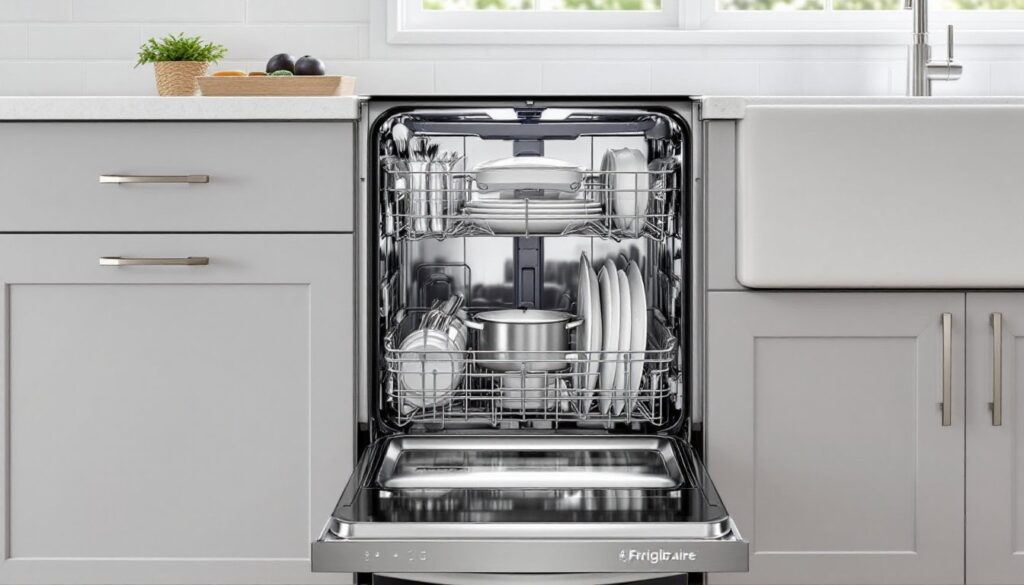
The adjustable upper rack shifts up or down to accommodate tall items, wine glasses on top or stockpots on the bottom. The mechanism uses side levers: it’s intuitive but requires unloading the rack first. Third-rack models add a shallow cutlery tray, freeing up space below. That tray works great for flatware and serving utensils but won’t fit tall steak knives or oversized ladles.
DryBoost Technology:
This fan-assisted drying system circulates air during the final phase, dramatically improving plastic drying performance. Standard heated-dry cycles leave Tupperware wet: DryBoost cuts that problem by roughly 60–70% based on appliance testing from major publications.
Energy and Water Use:
Gallery models average 3.5–4.5 gallons per cycle and pull 270 kWh annually. That qualifies for Energy Star certification. For context, hand-washing the same load typically uses 10–15 gallons. Over a year, the savings add up, assuming you run full loads, not half-empty racks.
Top Frigidaire Gallery Dishwasher Models Compared
Frigidaire releases model updates annually, but core features stay consistent. Here’s how the 2026 lineup stacks up:
FGID2476SF (24-inch built-in):
- Decibel rating: 49 dB
- Racks: Adjustable upper rack, no third rack
- Finish: Smudge-proof stainless steel
- Best for: Standard kitchens where cost matters more than extras
FGIP2468UF (24-inch built-in with third rack):
- Decibel rating: 47 dB (quietest in the line)
- Racks: Three-rack system with adjustable middle rack
- Bottle jets: Four dedicated sprayers for narrow items like water bottles
- Best for: Families with lots of glassware and utensils
FGID2479SF (24-inch built-in, entry model):
- Decibel rating: 52 dB
- Racks: Fixed upper rack, standard two-rack design
- Best for: Budget-focused buyers or rental properties
All models share the same 24-inch width, which is the standard cabinet opening size in North America. If you’re replacing an existing dishwasher, odds are it’s a 24-inch unit. European-style 18-inch models exist but aren’t part of the Gallery lineup.
Price differences typically range from $550 to $850 depending on retailer and seasonal promotions. The third-rack model commands a $100–$150 premium over the base unit, worth it if you run the dishwasher daily and hate sorting silverware.
Installation and Setup: What Homeowners Need to Know
Most homeowners can handle a dishwasher swap (replacing an existing unit) in 2–3 hours with basic tools. New installations requiring plumbing or electrical work often need permits and a licensed plumber or electrician, check local codes before starting.
Required Connections:
- Water supply: 3/8-inch compression fitting. The supply line should have a shut-off valve under the sink for easy maintenance.
- Drain line: 5/8-inch or 7/8-inch rubber hose connecting to the sink drain or garbage disposal. Install a high loop or air gap to prevent backflow (required by IRC plumbing code in most jurisdictions).
- Electrical: Hardwired or plug-in 120V, 15-amp circuit. Hardwiring requires an electrician in many areas unless you’re confident working inside a junction box. Use 12-gauge wire and a 20-amp breaker if code allows.
Installation Steps (Replacement Only):
- Shut off water and power at the source. Verify power is off with a non-contact voltage tester.
- Disconnect old unit: Remove the access panel at the bottom front. Disconnect water line, drain hose, and electrical. Pull the unit out carefully, older dishwashers can weigh 70+ pounds.
- Check cabinet opening: Should measure 24 inches wide, 34–35 inches tall, and 24 inches deep. If the opening is off by more than 1/2 inch, you’ll need shims or cabinet modification.
- Level the new unit: Use adjustable front legs. A dishwasher that’s not level will drain poorly and leak. Check side-to-side and front-to-back with a torpedo level.
- Reconnect plumbing and power: Hand-tighten the water line, then give it a quarter-turn with a wrench. Over-tightening cracks the valve. Secure the drain hose with a hose clamp.
- Anchor to countertop: Use the mounting brackets provided. Drill pilot holes to avoid splitting laminate or solid-surface counters.
- Test for leaks: Run a short cycle and inspect all connections. Keep a towel handy.
When to Call a Pro:
If you’re adding a dishwasher where none existed, you’ll need to run a dedicated water line, install a drain, and possibly add an electrical circuit. That’s a full-day job involving cutting into cabinetry and walls. Hire a licensed contractor unless you’ve done residential plumbing and electrical before.
Maintenance Tips to Keep Your Dishwasher Running Smoothly
Dishwashers fail prematurely from neglect, not design flaws. Follow these maintenance tasks to avoid service calls:
Monthly:
- Clean the filter: Remove the cylindrical filter at the tub bottom. Rinse under hot water and scrub with a soft brush. Clogged filters reduce spray pressure and leave food particles on dishes. Models with self-cleaning filters still benefit from occasional manual cleaning.
- Wipe door seals: Food debris and grease accumulate on the rubber gasket. A damp cloth prevents mold and maintains the seal. Avoid harsh cleaners that dry out rubber.
Quarterly:
- Run a cleaning cycle: Use a dishwasher cleaner (citric acid-based or commercial product) to remove mineral deposits and grease buildup. Place the cleaner in the detergent cup and run the hottest cycle.
- Inspect spray arms: Remove the arms (they twist or pop off) and clear clogged holes with a toothpick. Hard water causes calcium buildup that blocks jets.
Annually:
- Check the drain hose: Look for kinks, cracks, or sagging. The hose should rise at least 20 inches above the floor before descending to the drain connection (the high loop).
- Test the float switch: Located in the tub bottom, this safety device prevents overfilling. Lift it and let it drop: you should hear a click. A sticky float can cause leaks or incomplete fills.
Daily Habits:
- Scrape, don’t rinse: Modern dishwashers need some food residue to activate enzymes in detergent. Pre-rinsing is wasteful. Just scrape large chunks into the trash.
- Load correctly: Place large items on the sides, not in the center where they block spray arms. Face dish surfaces toward the center. Overloading reduces cleaning effectiveness by 30–40% based on kitchen appliance studies.
- Use quality detergent: Cheap powder detergents don’t dissolve fully in shorter cycles. Gel packs or pods deliver consistent results. Store detergent in a cool, dry place, humidity degrades cleaning power.
Common Issues and DIY Troubleshooting Solutions
Most Frigidaire Gallery problems are fixable without a technician. Here’s how to diagnose and solve the top complaints:
Dishes Aren’t Getting Clean:
- Check water temp: Run the kitchen faucet until it’s hot before starting the dishwasher. Incoming water should be 120°F minimum. If your water heater is set too low, the dishwasher can’t compensate.
- Inspect the spray arms: Spin them by hand. They should rotate freely. Remove and clean if they’re stiff or clogged.
- Replace worn gaskets: If the door doesn’t seal tightly, water pressure drops. Run your hand along the gasket, it should feel pliable, not cracked.
Dishwasher Won’t Drain:
- Clean the filter: 90% of drain issues trace back to a clogged filter or debris in the sump.
- Check the drain hose: Disconnect at the sink and flush with water. A partial blockage slows draining without stopping it entirely.
- Test the drain pump: Listen for a humming sound during the drain cycle. If it’s silent, the pump may be dead (requires replacement). If it hums but doesn’t pump, something’s jammed in the impeller.
Unit Won’t Start:
- Verify the door latch: The dishwasher won’t run unless the door is fully closed and latched. Try slamming it a bit harder, latches wear over time.
- Check the control lock: Look for a lock icon on the display. Press and hold the designated button (usually 3–5 seconds) to unlock.
- Reset the unit: Hold the Start/Cancel button for 5 seconds or flip the breaker off for 1 minute. Resetting clears error codes and stuck cycles.
Excessive Noise:
- Check for debris: Silverware or small items can fall through the racks and hit the pump. Remove the lower rack and inspect the sump area.
- Level the unit: An unlevel dishwasher vibrates against cabinets. Adjust the front legs and recheck with a level.
- Inspect the wash arm bearings: Over time, the plastic hub that supports the spray arm wears out, causing rattling. Replacement hubs cost $10–$20 and snap into place.
Leaking Water:
- Tighten connections: Most leaks originate at the water supply line or drain hose. Check for moisture and tighten fittings.
- Replace the door gasket: A $15 part that takes 10 minutes to install. Pull the old gasket out of the channel and press the new one in, no tools required.
- Check the tub: Rare, but stainless tubs can develop pinhole leaks from corrosion. If water pools under the unit and connections are dry, call for service.
When to Replace vs. Repair:
If the control board or pump fails, repair costs often hit $200–$400. On a $600 dishwasher that’s 6+ years old, replacement makes more financial sense than repair. For strategies on when to upgrade versus keep repairing, consider the appliance’s age and overall condition.
Conclusion
The Frigidaire Gallery dishwasher delivers dependable mid-range performance without gimmicks. For homeowners prioritizing practicality over tech features, it’s a solid choice, especially if you maintain it properly and load it correctly. Focus on models with the third rack and DryBoost if your budget allows, and don’t skip the prep work during installation. A level unit with clean connections will outlast a carelessly installed premium model every time.