Table of Contents
ToggleKeeping indoor air clean isn’t just about running an air purifier, it’s about maintaining the filters that do the actual work. Shark air purifiers have built a solid reputation for pulling dust, allergens, and odors out of home air, but they’re only as good as the filters inside them. Whether you’ve just unpacked a new Shark 3-in-1 model or you’re noticing reduced airflow on an older unit, understanding how these filters work and when to swap them out makes the difference between breathing easy and breathing recycled dust. This guide walks through everything a homeowner needs to know about Shark air purifier filters, from identifying filter types to performing replacements without calling in help.
Key Takeaways
- Shark air purifier filters use a certified True HEPA filter that traps 99.97% of particles as small as 0.3 microns, combined with activated carbon and pre-filters for comprehensive three-stage filtration.
- Replace HEPA filters every 6–12 months depending on household conditions like pet ownership and air quality, but clean reusable pre-filters every 30 days to extend overall filter life by 2–4 months.
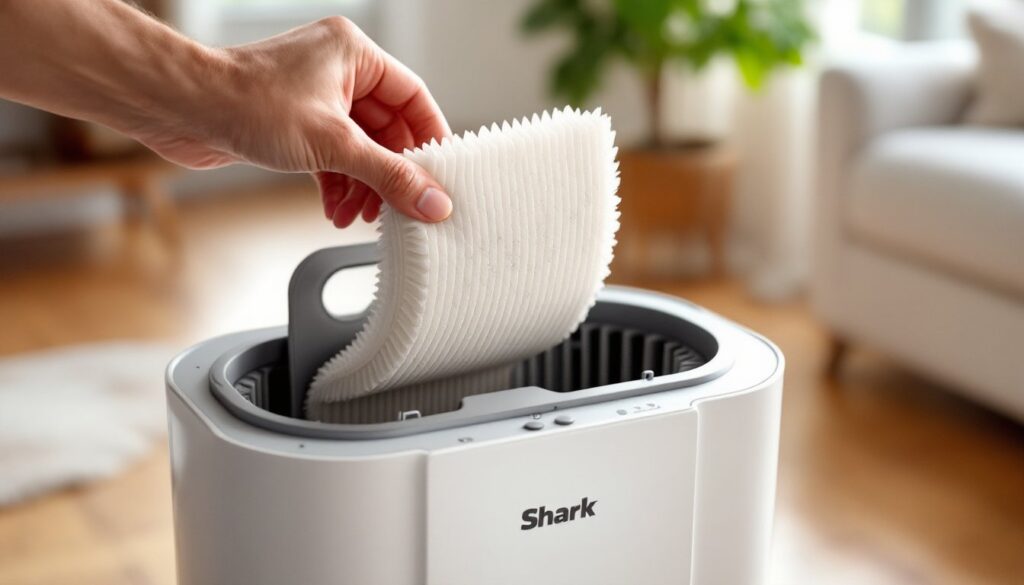
- Genuine Shark air purifier filter replacement requires no tools—simply remove the panel, slide out the old filter, wipe the compartment, and install the new one in about 5 minutes.
- Never wash or vacuum True HEPA filters as it destroys their electrostatic charge; only pre-filters and exterior grilles can be safely cleaned.
- Buy genuine Shark filters directly from SharkClean.com or major retailers like Amazon and Walmart to avoid counterfeit filters that can reduce filtration efficiency by up to 30%.
What Makes Shark Air Purifier Filters Different?
Shark air purifier filters stand out primarily because of their multi-stage filtration approach. Most Shark models don’t rely on a single filter doing all the work, they layer different media types to capture everything from visible dust bunnies down to microscopic allergens.
The core of most Shark systems is a True HEPA filter, which meets the HEPA H13 standard for trapping 99.97% of particles as small as 0.3 microns. That includes pollen, pet dander, mold spores, and some bacteria. What sets Shark apart is how they combine this HEPA layer with activated carbon filters for odor control and pre-filters that catch larger debris before it clogs the HEPA media.
Unlike some budget brands that use “HEPA-type” or “HEPA-like” filters (which don’t meet true HEPA standards), genuine Shark replacement filters are certified to perform at that 99.97% threshold. The housing design also matters, Shark uses sealed filter compartments that force air through the media rather than letting it leak around the edges, a common failure point in cheaper units.
Another practical difference: Shark air purifier filters are engineered for tool-free replacement. No screws, no latches that break after three uses, just a panel that pops off and a filter that slides out. For DIYers used to over-engineered appliances, it’s refreshingly straightforward.
Types of Shark Air Purifier Filters and What They Remove
Shark air purifiers typically use a three-stage filtration system, though the exact configuration varies by model. Here’s what each layer does:
Pre-Filter (Foam or Mesh)
This is the first line of defense, catching hair, lint, and larger dust particles before they reach the finer filters. Pre-filters are usually washable and reusable, think of them like the lint trap in a dryer. They extend the life of the more expensive filters downstream.
True HEPA Filter
The workhorse. HEPA media is a dense mat of fibers that traps particles through a combination of interception, impaction, and diffusion (physics terms that basically mean particles get stuck in the maze of fibers). This layer handles pollen, dust mites, mold spores, and pet dander. It’s what allergy sufferers rely on. The HEPA filter in Shark units is not washable, once it’s saturated, it needs replacement.
Activated Carbon Filter
Carbon is porous at a microscopic level, giving it massive surface area to adsorb (not absorb, adsorb means molecules stick to the surface) odors and volatile organic compounds (VOCs). This layer tackles cooking smells, pet odors, smoke, and off-gassing from furniture or paint. Some Shark models integrate carbon into the HEPA filter, while others use a separate cartridge.
The Shark 3-in-1 air purifier specifically refers to models that combine all three stages in a compact form factor, often with a cylindrical filter design that maximizes media surface area without taking up extra floor space. When shopping for shark air purifier replacement filters, confirm whether your model uses a combo HEPA/carbon filter or separate cartridges, the part numbers aren’t always interchangeable.
How Often Should You Replace Your Shark Air Purifier Filter?
Shark recommends replacing HEPA filters every 12 months under normal use, but “normal” is doing a lot of work in that sentence. A purifier running 24/7 in a house with three shedding dogs isn’t operating under the same conditions as one running 8 hours a day in a tidy apartment.
Here’s a more practical replacement schedule:
Every 6–8 months:
- Homes with multiple pets
- High-traffic areas with kids tracking in dirt
- Areas with ongoing renovations or construction nearby
- Smokers in the household
Every 10–12 months:
- Light to moderate pet dander
- Standard household dust
- Typical cooking odors
Every 12–18 months:
- Single occupant, minimal dust sources
- Purifier used intermittently
- Pre-filter cleaned regularly (which extends HEPA life)
Most Shark models include a filter indicator light that triggers based on runtime hours. It’s a useful reminder, but treat it as a starting point, not gospel. If airflow feels weak or the unit struggles to clear odors it used to handle easily, check the filter even if the light hasn’t come on.
Pre-filters should be cleaned every 30 days. Pull them out, rinse under a faucet, let them air-dry completely (24 hours is safe), then reinstall. A clogged pre-filter chokes airflow and forces the motor to work harder, shortening the unit’s lifespan.
Carbon filters lose effectiveness faster than HEPA because they saturate with odor molecules. If you notice smells lingering even with a clean pre-filter and recent HEPA replacement, the carbon layer is likely spent.
Step-by-Step Guide to Replacing Your Shark Air Purifier Filter
Replacing shark air purifier filters is one of the easiest appliance maintenance tasks a homeowner will tackle. No tools required, no risk of breaking anything if you follow the basic steps.
Before You Start:
- Turn off and unplug the unit. Even though there’s no electrical contact with the filter, work on unplugged appliances as a rule.
- Have the new filter unboxed and ready. Check the model number on the old filter to confirm it matches.
Step 1: Remove the Filter Cover
Most Shark purifiers have a front or rear panel that either slides up or pops off with light pressure at the release tabs. On cylindrical models like some 3-in-1 units, the cover twists counterclockwise about a quarter turn.
Step 2: Pull Out the Old Filter
Grasp the filter handle (usually a recessed grip or tab) and pull straight out. If it resists, check for a locking tab you might’ve missed, don’t force it. The filter will be dusty, so have a trash bag ready.
Step 3: Clean the Filter Compartment
With the filter out, wipe down the interior with a dry or slightly damp microfiber cloth. Dust and pet hair accumulate on the seals and sensor contacts. Don’t use cleaners or get the compartment wet, just knock loose debris out.
Step 4: Remove Packaging from the New Filter
Shark filters ship in plastic bags to keep them clean. Peel off all packaging, including any cardboard inserts. Some filters have protective film over the media, remove that too.
Step 5: Install the New Filter
Slide the filter in along the same track the old one came out of. It should seat with a light click or settle flush against the back wall. There’s usually only one correct orientation, if it doesn’t slide in easily, rotate it 180 degrees.
Step 6: Replace the Cover and Reset the Indicator
Snap or slide the panel back on. Plug in the unit and hold the filter reset button (usually on the control panel) for 3–5 seconds until the indicator light turns off or changes color. Check your model’s manual for the exact reset procedure, it varies.
Total time: 5 minutes, including cleanup. If it’s taking longer, you’re overthinking it.
Cleaning vs. Replacing: Maintaining Your Filter for Maximum Performance
There’s a persistent myth that HEPA filters can be vacuumed or washed to extend their life. Don’t do this. HEPA media is fragile, vacuuming can tear the fibers, and washing destroys the electrostatic charge that helps trap particles. Once a HEPA filter is saturated, it’s done.
What can be cleaned:
Pre-Filters (Washable Foam or Mesh)
- Remove every 30 days
- Rinse under lukewarm water until the runoff is clear
- Gently squeeze out excess water (don’t wring or twist)
- Air-dry completely before reinstalling, damp filters grow mold
Exterior Grilles and Vents
- Wipe with a damp cloth weekly to prevent dust buildup that restricts airflow
- Use a soft brush attachment on a vacuum for tight grille slots
What cannot be cleaned:
- HEPA filters (accordion-pleated paper or fiber media)
- Activated carbon layers (washing flushes out the carbon granules)
Some newer Shark models advertise “cleanable HEPA” filters, which are actually permanent electrostatic filters that don’t meet true HEPA standards. They can be rinsed, but they won’t capture particles as small as a genuine HEPA filter. Read the manual, if it says “HEPA-type” or “cleanable,” it’s not the same as a certified True HEPA replacement.
Regular pre-filter maintenance genuinely extends the life of downstream filters. A clean pre-filter can add 2–4 months to your HEPA filter’s effective lifespan by preventing it from clogging prematurely with large particles it was never designed to handle.
Where to Buy Genuine Shark Replacement Filters and What to Avoid
Genuine Shark air purifier replacement filters are available through several channels:
Direct from Shark:
- SharkClean.com sells OEM filters with the correct part numbers
- Often bundles multi-packs at a discount
- Shipping can be slow during peak seasons
Major Retailers:
- Amazon, Walmart, Target, and Best Buy stock Shark filters
- Check seller reputation, third-party sellers sometimes ship counterfeit or expired stock
- Look for “Ships from and sold by [Retailer]” to avoid marketplace sellers
Home Improvement Stores:
- Home Depot and Lowe’s carry common Shark filter models in-store
- Convenient for same-day pickup if you need a replacement immediately
Research from CNET’s 2026 air purifier roundup highlights that using non-genuine filters can reduce filtration efficiency by up to 30%, and testing by Good Housekeeping’s cleaning experts confirms that genuine Shark HEPA filters consistently outperform aftermarket alternatives in particle capture rates.
Red flags for counterfeit or low-quality filters:
- Price significantly lower than OEM (if it’s half the cost, it’s probably half the filter)
- Vague product descriptions that don’t list a specific Shark model number
- Packaging that looks off, blurry logos, misspellings, or thin cardboard
- Filters that arrive without plastic wrap or sealed bags
- Reviews mentioning “doesn’t fit” or “smells like chemicals”
Part number matching is critical. Shark uses different filter designs even within the same product line. A filter for the Shark HP102 won’t necessarily fit the HP100, even though they look similar. Check the existing filter or the owner’s manual for the exact part number (usually printed on the filter frame or packaging).
Some third-party brands market “compatible” filters at lower prices. Quality varies wildly. If you go this route, verify the seller offers returns and check that the filter media looks dense and evenly pleated, cheap HEPA knockoffs often have visibly thinner media with irregular pleats.
Conclusion
Maintaining a Shark air purifier comes down to consistent filter care and timely replacements. Clean the pre-filter monthly, replace the HEPA and carbon filters on schedule, and stick with genuine parts when possible. The payoff isn’t just cleaner air, it’s a unit that runs efficiently and lasts beyond the warranty period. Most homeowners can handle every aspect of filter maintenance without professional help, making it one of the lowest-effort, highest-return tasks in home upkeep.