Table of Contents
ToggleWhen a Shark vacuum starts losing suction or the brushroll stops spinning, most homeowners assume it’s time to buy a new machine. But here’s the reality: replacing a worn filter, damaged hose, or dead battery costs a fraction of a new vacuum and takes maybe 20 minutes. Shark vacuums are built with modular components that DIYers can swap out with basic tools, sometimes no tools at all. This guide walks through identifying which parts fail most often, where to source them (genuine vs. aftermarket), how to match components to specific Shark models, and how to install them without a service call. Whether it’s an upright, cordless stick, or robot model, keeping replacement parts on hand extends the machine’s life by years.
Key Takeaways
- Shark vacuum replacement parts like filters, brushrolls, and hoses are affordable DIY fixes that extend your machine’s life by years without requiring a professional service call.
- Genuine Shark parts preserve warranty coverage and maintain performance through proper specifications, while cheap aftermarket alternatives risk reduced suction, motor damage, and safety hazards like counterfeit batteries.
- Filters, brushrolls, hoses, batteries, and belts are the most commonly replaced components, with replacement costs ranging from $5–$100 depending on the part type and model compatibility.
- Identify your Shark model number (located on the dust cup, back panel, or battery compartment) to ensure accurate parts lookup and proper fitment across compatible sub-models.
- Purchase genuine parts from SharkClean.com, Amazon (SharkNinja), or major retailers, and verify aftermarket components have 95%+ seller ratings with official certifications like UL or ETL for safety-critical parts.
- Most replacement tasks like filter swaps, brushroll installation, hose changes, and battery upgrades require no special tools and take under 20 minutes when you follow the DIY steps and prioritize safety precautions.
Why Quality Replacement Parts Matter for Your Shark Vacuum
Shark vacuums rely on tight tolerances and engineered airflow paths to maintain suction. A cheap aftermarket filter with looser weave or incorrect dimensions disrupts that balance, reducing performance and potentially damaging the motor. Genuine Shark parts, or high-quality third-party components that meet OEM specs, preserve the warranty and keep the machine running as designed.
Using substandard parts can also introduce safety risks. Counterfeit batteries, for instance, lack the thermal cutoffs and charge management circuits found in Shark-approved lithium-ion packs. Overheating or swelling batteries are rare but documented, especially with no-name replacements sold through unvetted third-party sellers. If a component interfaces with the motor or electrical system, the extra few dollars for a verified part is worth it.
From a cost perspective, investing in quality shark vacuum parts extends the vacuum’s operational life well beyond the typical 3-5 year replacement cycle. A $30 genuine HEPA filter lasts 6-12 months with regular rinsing, while a $10 knockoff may clog in weeks, forcing repeat purchases. The math favors quality over bargain hunting, especially for parts that directly affect cleaning performance.
Most Commonly Replaced Shark Vacuum Parts
Filters, Brushrolls, and Hoses
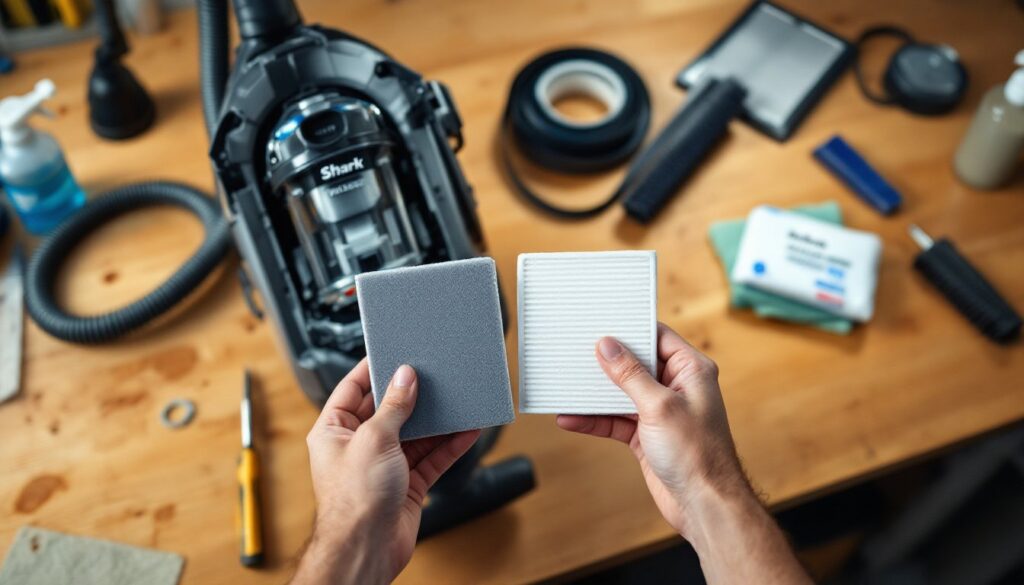
Filters top the list. Shark uprights and cordless models use foam pre-motor filters and felt post-motor filters (some models add HEPA filters for allergen capture). Pre-motor filters trap larger debris before it reaches the motor: post-motor filters catch fine dust in the exhaust. Both are washable, but foam deteriorates after 12-18 months of monthly rinsing, losing structure and allowing dust bypass. HEPA filters, while also washable, eventually lose their electrostatic charge and need replacement every 12 months under heavy use.
Brushrolls wear down from contact with carpet fibers, pet hair, and debris. Shark’s self-cleaning brushrolls (models like the Vertex and Stratos) use a comb to slice hair, but the bristles still flatten over time. When a brushroll no longer agitates carpet pile effectively, suction alone can’t compensate. Replacement brushrolls cost $15-$40 depending on the model. Some are tool-free, popping out with a button release: older models require a Phillips-head screwdriver to remove the nozzle cover.
Hoses develop cracks or tears at stress points, typically where the hose meets the wand or the vacuum body. Flexible corrugated hoses are vulnerable to kinks, especially if the vacuum tips over mid-use or gets stored with the hose bent sharply. A split hose kills suction instantly. Replacement hoses range from $20-$50 and usually include the collar fittings. When shopping for a shark vacuum cleaner parts hose, verify the collar diameter and attachment style (friction-fit vs. locking collar) to ensure compatibility.
Batteries, Belts, and Attachments
Batteries in Shark cordless models (ION, Freestyle, Vertex Cordless, Detect Pro) degrade with charge cycles. Lithium-ion packs lose capacity after 300-500 full discharge/recharge cycles, translating to 2-3 years for most users. When runtime drops from 40 minutes to 15, it’s time for a new battery pack. Genuine Shark batteries cost $60-$100: aftermarket options run $30-$50 but vary wildly in build quality. Always check for UL or ETL certification on replacement batteries.
Belts drive the brushroll on Shark upright models. Belts stretch, crack, or snap after prolonged use, especially if hair or string wraps around the brushroll shaft. A broken belt is obvious, the brushroll won’t spin, but a stretched belt slips under load, reducing agitation. Belts are inexpensive ($5-$10 for a two-pack) and considered a wear item. Replacing a belt every 12-18 months is preventive maintenance, not a repair.
Attachments, crevice tools, dusting brushes, upholstery nozzles, and pet multi-tools, crack or lose their locking tabs over time. Replacement attachments are sold individually or in kits. Shark’s pet multi-tool, for example, includes a self-cleaning brushroll for stairs and furniture: it’s a $25-$35 part that wears out faster than hard plastic attachments because of the motorized components. When ordering shark vacuum cleaners parts, note whether the attachment connects via a 1.25-inch round wand, oval wand, or proprietary quick-release collar.
Where to Buy Genuine vs. Aftermarket Shark Parts
Genuine Shark parts are available directly from SharkClean.com, Amazon (sold by SharkNinja), and major retailers like Walmart, Target, and Best Buy. Buying from the manufacturer guarantees fitment and preserves warranty coverage, critical if the vacuum is less than five years old. SharkClean.com offers a parts lookup tool: enter the model number (printed on the rating label inside the dust cup or on the back of the machine), and the site lists compatible components. Shipping is typically free over $50.
Aftermarket parts from brands like Orfeld, Green Label, and KEEPOW are widely available on Amazon, eBay, and vacuum specialty sites like eVacuumStore.com and VacuumDirect.com. Quality varies. Look for sellers with high ratings (95%+ positive) and at least 500 reviews. Third-party HEPA filters often cost half the price of genuine parts but may not seal as tightly in the filter housing. If suction drops after installing an aftermarket filter, the fitment is likely off.
Local vacuum repair shops stock common shark upright vacuum parts (filters, belts, hoses) and can order less common components. Shops also offer installation services for $15-$30 if the repair is beyond a user’s comfort level. For out-of-warranty machines, this can be more economical than manufacturer service.
Big-box home improvement stores (Home Depot, Lowe’s) carry a limited selection of Shark parts, usually filters and belts for popular models like the Navigator and Rotator. Inventory is hit-or-miss, so call ahead or check online stock before making a trip. For a comprehensive shark vacuum parts list, online retailers provide the widest selection, particularly for discontinued models.
When comparing prices, factor in shipping time. Genuine parts ship within 3-5 business days: aftermarket parts from overseas sellers can take 2-3 weeks. If the vacuum is the primary cleaning tool in the house, paying extra for faster delivery makes sense.
How to Identify the Right Parts for Your Shark Model
Every Shark vacuum has a model number printed on a label inside the dust cup, on the back of the main body, or underneath the battery compartment on cordless units. The format is typically two letters followed by three or four digits (e.g., NV356E, AZ1002, IX141). Write this number down, it’s the key to accurate parts lookup.
Shark uses model families that share certain components but not all. For example, the Navigator Lift-Away family (NV350 series) shares the same HEPA filter (part XHF350) but uses different hoses depending on the sub-model (NV352 vs. NV356). Ordering based on model family alone can result in a part that almost fits but doesn’t seal correctly.
Part numbers are stamped or printed on the component itself. A HEPA filter might have “XFF350” molded into the plastic frame. A hose connector might show “114FFJ” on the collar. Cross-reference this part number with the manufacturer’s catalog before ordering replacements. If the part number is worn or unreadable, measure the component’s dimensions (diameter of hose fittings, length and width of filters) and compare against product listings.
Owner’s manuals and exploded diagrams are available as PDFs on SharkClean.com’s support section. These diagrams label every component and list corresponding part numbers. If the manual is lost, a quick search for “Shark [model number] manual PDF” usually pulls it up. Exploded diagrams are particularly helpful for identifying internal parts like motor filters or dust cup seals that aren’t immediately visible.
For older or discontinued models, check vacuum enthusiast forums and sites like CNET for user-posted parts lists and cross-reference guides. Some aftermarket manufacturers produce “compatible with” charts showing which generic part fits multiple Shark models. These charts are useful but should be verified, relying solely on them can lead to ordering parts that require modification to fit.
DIY Installation Tips for Common Shark Vacuum Repairs
Replacing filters requires no tools. Power off and unplug the vacuum. For upright models, remove the dust cup and locate the foam and felt filters, usually clipped into a frame behind the cup. Pull the frame out, remove the old filters, and rinse the frame under warm water to clear accumulated dust. Insert the new filters (foam first, then felt), snap the frame back into the dust cup, and reattach. HEPA filters sit in a separate compartment, often on top of the dust cup or in the exhaust area. Lift the tab, pull the old filter, slide the new one in until it clicks, and close the cover. Filters should be hand-washed (no detergent) and air-dried every month to extend life: replace when they lose shape or stop sealing.
Brushroll replacement on Lift-Away and upright models: flip the vacuum over, locate the brushroll cover plate (usually two or three Phillips-head screws or tool-free clips), and remove it. Lift out the old brushroll, noting which end has the belt loop (if applicable). Slip the belt over the new brushroll’s drive shaft, align the brushroll ends with the slots in the nozzle housing, and press until it snaps in. Replace the cover plate. Test by powering on the vacuum and watching the brushroll spin. If it doesn’t, the belt isn’t seated correctly or the brushroll isn’t fully engaged.
Hose replacement varies by model. On Navigator and Rotator models, twist the hose collar counterclockwise to unlock it from the vacuum body, then pull. The new hose twists in clockwise until it locks. On Vertex and Stratos models, press the release button on the hose collar while pulling. Some cordless models use friction-fit hoses with no locking mechanism, just pull and push firmly. After installation, run the vacuum and check for air leaks at the collar by holding a tissue near the connection. Movement indicates a poor seal.
Battery pack replacement on cordless models: press the battery release button (usually on the handle or near the motor housing) and slide the old pack out. Charge the new battery fully before first use. Insert the new pack into the slot until it clicks. Shark batteries have built-in charge indicators (LED lights): if the indicator doesn’t light up after installation, remove and reseat the battery. Some models require the battery to be fully clicked in before the vacuum will power on, a safety interlock feature.
Belt replacement on uprights: follow the brushroll removal steps above. Once the brushroll is out, the belt slips off easily. Loop the new belt over the motor shaft (a small pulley visible in the nozzle housing), then stretch it over the brushroll drive shaft before reinstalling the brushroll. Belts should have slight tension when installed: if the belt feels loose, it’s the wrong size or the motor shaft is worn (less common). Shark belts are model-specific, so double-check compatibility.
Safety note: Always unplug the vacuum before opening any compartment. Even with the power switch off, some models (particularly cordless units) can activate the brushroll if the trigger is pressed. Wear safety glasses when working near the brushroll, debris and pet hair can flick out during disassembly. Keep replacement parts like filters and batteries out of direct sunlight and extreme heat to prevent degradation before installation. For home organization tips on storing spare parts, designate a labeled bin or drawer in a climate-controlled space.