Table of Contents
ToggleShopping for an air purifier shouldn’t feel like decoding HVAC blueprints, but walk into any big-box retailer and you’ll face a wall of identical-looking boxes with wildly different specs. Target stocks a surprisingly solid range of air purifiers, from budget models under $50 to HEPA-equipped units that rival specialty brands, making it a convenient stop for homeowners tackling indoor air quality without visiting five different stores. This guide cuts through the marketing jargon to help you pick the right unit for your square footage, filter needs, and budget, with honest talk about what works, what’s overkill, and what you’ll actually spend on replacement filters down the road.
Key Takeaways
- Target air purifiers offer a curated selection of reliable brands like Honeywell and Levoit at competitive prices, with models ranging from $40 for small rooms to $250 for larger spaces, plus convenient in-store returns and flexible exchange policies.
- True HEPA filtration (99.97% particle capture) outperforms HEPA-type filters for allergy and asthma relief, and comparing CADR ratings and filter replacement costs helps avoid hidden expenses that can exceed the unit’s initial purchase price over two years.
- Properly sizing an air purifier for your space—accounting for square footage, ceiling height, and aiming for 4–5 air changes per hour—is critical; undersizing is the most common mistake homeowners make and results in ineffective air cleaning.
- Regular maintenance like vacuuming pre-filters every 2–4 weeks, buying replacement filters during Target sales, and budgeting $30–60 annually per unit keeps operating costs predictable and extends the lifespan of your air purifier.
- Noise levels and filter accessibility matter for bedroom use; test units in-store when possible, skip unnecessary features like ionizers and UV lights unless you have specific air quality needs, and consider multiple smaller units for open-concept spaces rather than one large model.
Why Choose a Target Air Purifier for Your Home
Target isn’t a specialty HVAC supplier, but that’s exactly why it makes sense for most residential air quality projects. The store curates a manageable selection, typically 8-15 models at any given time, focused on brands with solid track records like Honeywell, Levoit, and Holmes. You’re not sifting through 200 options or dealing with sketchy third-party sellers.
Convenience matters for DIY home improvement. Need to return a defective unit? Target’s return policy beats ordering sight-unseen from an online marketplace. Grabbed the wrong size for your bedroom? Swap it during your next grocery run. The physical store lets you compare footprints, check noise ratings on the box, and avoid the guesswork that comes with online shopping.
Pricing sits in the sweet spot for most homeowners. Budget models start around $40-60 for basic particle filtration in small rooms (up to 150 sq ft), while mid-range HEPA units covering 300-400 sq ft typically run $100-180. That’s competitive with Amazon and often better than specialty retailers marking up the same models 20-30%. Target’s frequent sales and RedCard discounts can shave another 5-15% off, making it a practical choice when you’re budgeting a whole-house air quality upgrade across multiple rooms.
The selection skews toward residential use cases, bedrooms, home offices, living rooms, rather than commercial or workshop applications. If you’re running a woodshop or dealing with serious mold remediation, you’ll need industrial CFM ratings and probably a licensed remediation pro. But for dust, pollen, pet dander, and general indoor air quality maintenance, Target’s lineup covers 90% of what homeowners actually need.
Top Target Air Purifier Models to Consider in 2026
Target rotates inventory seasonally, but certain models consistently appear on shelves because they deliver results at their price points. Here’s what’s worth considering based on room size and feature set.
Budget-Friendly Options Under $100
The Holmes Desktop Air Purifier (model HAP706) typically retails for $45-55 and handles spaces up to 109 sq ft, think a home office, nursery, or small bedroom. It uses a basic HEPA-type filter (not true HEPA, which captures 99.97% of particles down to 0.3 microns, but still grabs most dust and pollen). Expect to replace the filter every 12 months at around $15-20 per cartridge. It’s whisper-quiet on low speed but won’t tackle a finished basement or open-concept living area.
Levoit’s Core 300 regularly appears at Target for $80-100 and steps up to true HEPA filtration for rooms up to 219 sq ft. The three-stage filtration (pre-filter, HEPA, activated carbon) handles pet odors better than budget models, and the cylindrical design pulls air from 360 degrees rather than just one side. Filter replacements run $30-35 every 6-8 months depending on use. This one’s a solid pick for a main bedroom or dedicated allergy sufferer’s space.
Mid-Range and Premium Choices
Honeywell’s HPA300 sits at the top of Target’s typical range ($200-250) and covers up to 465 sq ft, making it viable for larger living rooms or open kitchen-dining combos. It’s one of the few models regularly tested by independent labs, and testing data from cleaning experts confirms it moves serious air volume, 320 CADR (Clean Air Delivery Rate) for dust. That means it cycles the air in a 465 sq ft room roughly five times per hour, which is the benchmark for effective particle removal. The trade-off: it’s bulkier (23″ tall, 20 lbs) and louder on max speed. Replacement HEPA filters cost $50-60 and last about 12 months.
The Levoit Core 400S (around $180-200 at Target) adds smart connectivity, app control, voice assistant compatibility, and auto mode that adjusts fan speed based on real-time air quality sensors. Coverage tops out at 403 sq ft, and expert reviews note its performance rivals pricier smart models. If you’re integrating home automation (smart thermostats, lighting controls), the scheduling features actually get used. Filter cost: $40-45 every 6-8 months.
Key Features to Look for When Shopping at Target
Not all air purifiers are built the same, and Target’s aisle doesn’t always clarify what actually matters versus marketing fluff. Here’s what to prioritize.
True HEPA vs. HEPA-type matters. True HEPA filters meet a specific standard: capturing 99.97% of particles as small as 0.3 microns. HEPA-type or HEPA-like filters are cheaper but less effective, they might grab 85-90% of particles. If you’re dealing with allergies or asthma, spend the extra $20-30 for true HEPA. Check the box carefully: manufacturers bury this distinction in fine print.
CADR ratings tell you actual performance. CADR (Clean Air Delivery Rate) measures how many cubic feet per minute of clean air the unit delivers for smoke, dust, and pollen. Higher numbers mean faster cleaning. A room rated for 300 sq ft with a CADR of 150 will take twice as long to clean the air as a unit with a CADR of 300. Target’s shelf tags don’t always list CADR, look on the side or back of the box.
Filter replacement costs add up. That $50 purifier with $40 filters every four months costs more over two years than a $120 unit with $30 filters lasting eight months. Target’s website often lists compatible replacement filters: check those prices before buying. Some models use washable pre-filters that extend HEPA filter life by 2-3 months, a worthy convenience feature.
Noise levels matter for bedrooms. Manufacturers list decibel ratings, but they’re measured at low speed in ideal conditions. If the unit will run while you sleep, test it in-store if possible or check return policies. Budget-friendly options highlighted by reviewers often sacrifice quiet operation for price, a $60 unit humming at 55 dB (about as loud as a normal conversation) might kill your sleep quality.
Skip gimmicks unless you need them. Ionizers, UV lights, and aromatherapy trays add cost and complexity. UV lights can help with mold spores but require separate bulb replacement (another $15-25/year). Ionizers produce trace ozone, which can irritate lungs in sensitive individuals. Stick to mechanical filtration unless you have a specific, documented need.
How to Choose the Right Size Air Purifier for Your Space
Undersizing is the most common mistake homeowners make. An air purifier rated for 200 sq ft will technically run in a 400 sq ft room, it just won’t clean the air effectively or quickly enough to matter.
Calculate actual square footage, not just the room. Open floor plans require treating connected spaces as one zone. A 15×20 living room (300 sq ft) that opens to a 10×12 dining area (120 sq ft) needs a unit rated for at least 420 sq ft. Measure with a tape measure if the floor plan’s not handy, don’t guess.
Consider ceiling height for rooms over 8 feet. Most purifier ratings assume standard 8-foot ceilings. If you’ve got 10-foot ceilings in a finished basement or vaulted ceilings in a great room, you’re moving more cubic feet of air. Rough rule: multiply the square footage rating by 1.25 for 10-foot ceilings, 1.5 for 12-foot ceilings. A unit rated for 300 sq ft will effectively cover only about 240 sq ft in a room with 10-foot ceilings.
Air changes per hour (ACH) determine effectiveness. Professional standards recommend at least 4-5 air changes per hour for allergy and asthma relief. That means the purifier cycles all the air in the room four to five times every 60 minutes. Target’s product specs sometimes list ACH: if not, divide the CADR by the room’s cubic footage (length × width × height), then multiply by 60 to get air changes per hour. If the math gives you less than 4 ACH, size up to the next model.
Multiple smaller units often beat one large unit. Instead of a single 500 sq ft purifier for a sprawling open-concept space, two 300 sq ft units placed strategically (one near the kitchen, one in the seating area) provide better coverage and let you run them independently. Target’s budget models make this approach cost-effective, two $80 units give you redundancy and zone control for less than one premium model.
Maintenance Tips and Filter Replacement Costs
Air purifiers are low-maintenance, but neglecting filters turns them into expensive box fans that circulate dirty air.
Pre-filters extend HEPA life. Most units include a washable pre-filter (a mesh or foam layer) that catches large particles, pet hair, dust bunnies, lint. Vacuum or rinse it every 2-4 weeks. This simple step can double HEPA filter lifespan from six months to a year. Mark your calendar or set a phone reminder: it takes two minutes.
Filter replacement timelines are guidelines, not gospel. Manufacturers assume moderate use (12 hours/day in average air quality). If you’re running the unit 24/7 during wildfire season or in a home with three shedding dogs, you’ll hit the replacement interval faster. Most units have a filter change indicator light, but it’s usually time-based, not sensor-based. Check the filter visually every few months, if it’s visibly gray or clogged, swap it regardless of the timeline.
Buy filters in bulk when on sale. Target runs promotions on replacement filters 3-4 times a year. Grab a two-pack and store them in a closet. Filters don’t expire if kept dry. A single emergency Amazon order at full price wipes out months of savings from buying the purifier on sale.
Budget $30-60 per year per unit for filters. Entry-level models with HEPA-type filters run $15-25 annually. True HEPA units in mid-range models average $40-50. Premium models with activated carbon layers can hit $60-80 if you’re replacing every six months. Factor this into total cost of ownership, a $100 unit with $50/year filter costs is $250 over three years, while a $180 unit with $35/year filters totals $285. The upfront savings shrink fast.
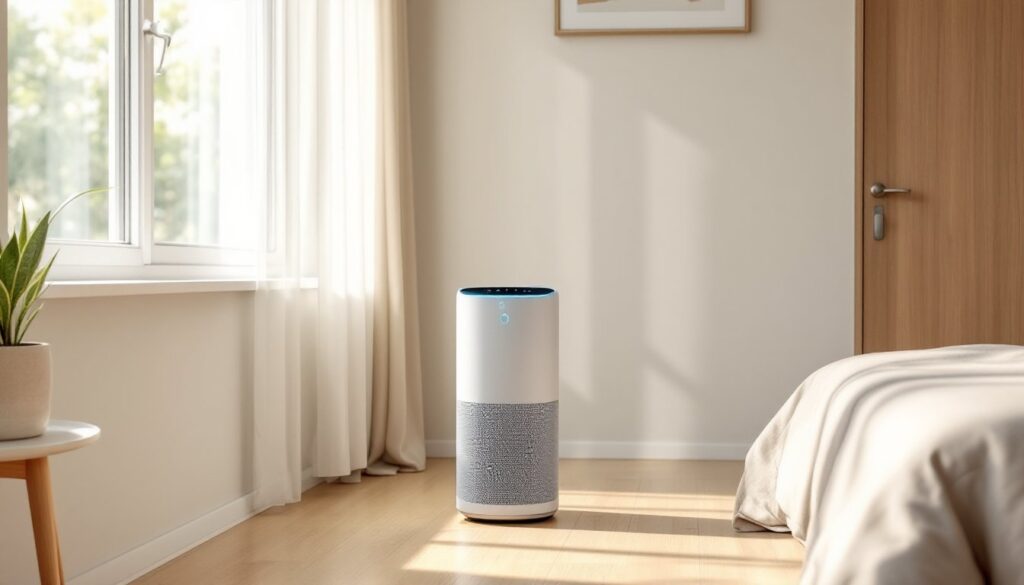
Keep the unit away from walls and furniture. Air purifiers need clearance, typically 12-18 inches on all intake sides, to pull air efficiently. Shoving a unit into a corner or behind a couch chokes airflow and makes the motor work harder, shortening its lifespan. Place it centrally in the room if possible, or at least keep the intake side clear.
Wipe down the exterior monthly. Dust accumulates on the housing and can get pulled back into the intake. A damp microfiber cloth takes 30 seconds. Unplug the unit first, basic electrical safety applies even to low-voltage appliances.
If you’re dealing with severe air quality issues, mold, construction dust, or persistent odors that a consumer purifier can’t touch, consult an HVAC professional. Whole-house filtration systems or ERV (Energy Recovery Ventilator) units integrate with your existing ductwork and handle volumes that portable units can’t match. That’s beyond DIY, but knowing when to call a pro saves you from throwing money at undersized solutions.